Chicago City Guide.
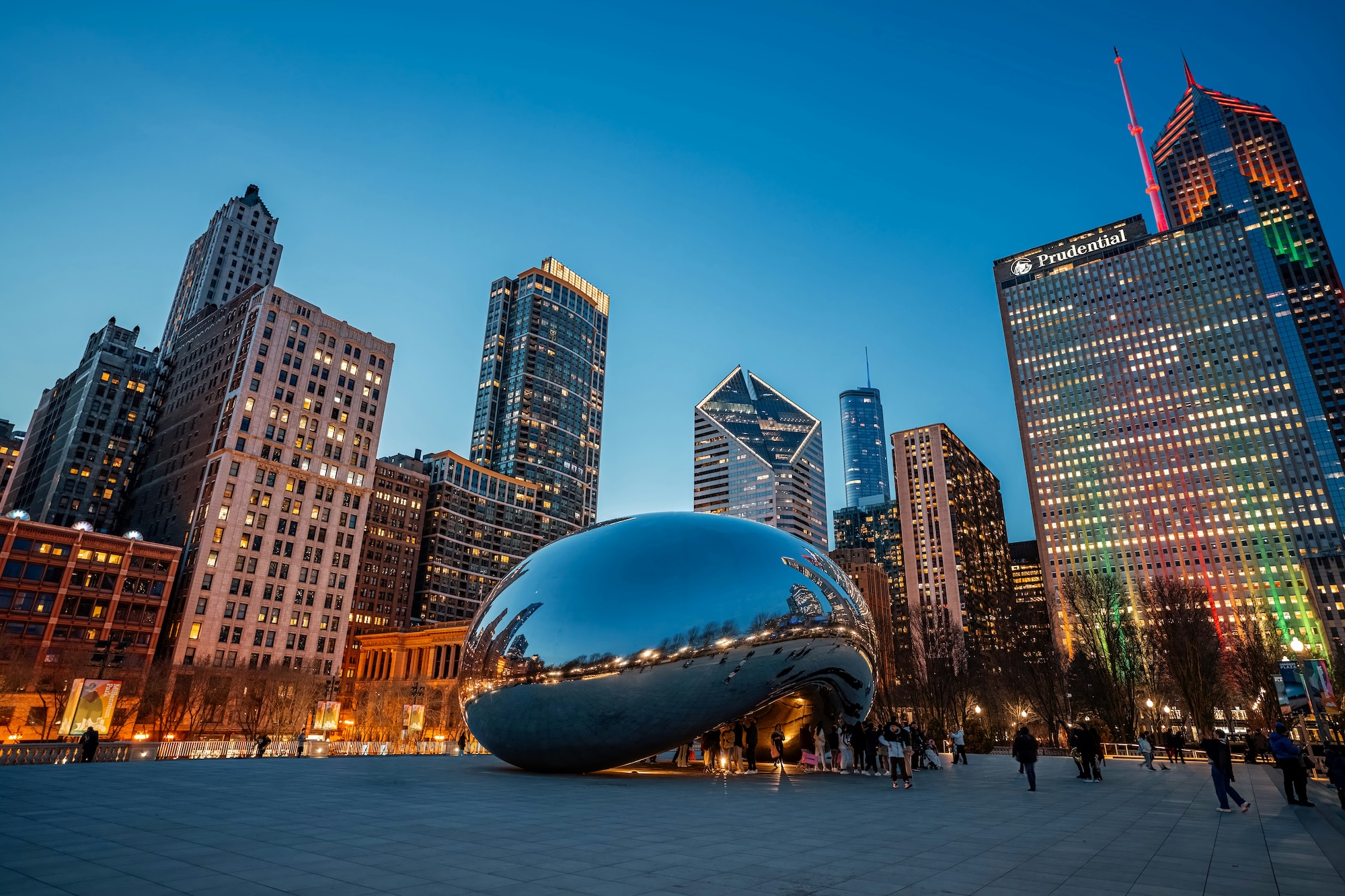
"Architecture, food, music, sports. Chicago has no weak spots."

Bars & Pubs
KUMIKO, West Loop
Awarded Best Bar in the Midwest and ranked tenth in North America in 2025. Japanese technique meets Midwestern ingredients. Every visit begins with a welcome tea. Precise, thoughtful, and unparalleled in the entire city.
INSIDER:
Reservations can be made online two weeks in advance. If available, the seasonal Omakase cocktail menu is highly recommended; it changes regularly and is always the best choice.
GREEN DOOR TAVERN + THE DRIFTER, River North 3
One of the first buildings constructed after the Great Chicago Fire of 1871. Upstairs is a historic pub, downstairs a Prohibition-era speakeasy, hidden behind a bookshelf. Two completely different experiences, one single address.
INSIDER:
The Drifter charges a $7 cover, which includes burlesque and live music. It's best to start upstairs and then head down when the show begins around 9 PM.
THE GREEN MILL, Uptown
A jazz bar since 1907. Al Capone had his regular booth here, number 55, which still exists today. Live music every evening, no cover charge before 9 PM. One of the most atmospheric venues Chicago has to offer.
MONEYGUN, Wicker Park
Hidden behind an unmarked door on Milwaukee Avenue. Recently made it onto the list of North America's 50 Best Bars. The cocktail menu changes thematically and is based on unusual concepts.
BEST INTENTIONS, Wicker Park
Ranked 16th in North America in 2025. Dive bar atmosphere meets world-class cocktails. Proof that ambition and accessibility don't have to be mutually exclusive. One of the most authentic bars on this list.
BILLY SUNDAY, Logan Square
Over 800 amari, bitters, and rare spirits line the bar. The cocktail menu reads more like a specialized library than a typical drink list. For anyone who takes spirits seriously, this is the place to be.
Food & Cafes
BAVETTE'S BAR & BOEUF, River North
Opened in 2012, with French flair but without stiffness, in a space that truly deserves the word seductive. Red leather banquettes, antiqued mirrors, exposed brickwork, a zinc-topped bar, and an old washbasin repurposed as a raw bar. The restaurant is located in River North, a neighborhood often referred to as Chicago's Gallery District due to its concentration of art galleries, surpassed only by Chelsea in New York. Listed among North America's top steakhouses, and consistently the most atmospheric space in the city. The evening automatically slows down here, whether you planned it or not.
INSIDER:
Reservations are available online 21 days in advance, starting precisely at 9 AM, and fill up quickly. Without a reservation, guests are welcome at the bar, where the full menu is served, and no reservation fee applies. The most charming spot is a niche in the lower dining room, offering the most intimate seating in the entire establishment. The Bone-in Ribeye is the right choice.
AKAHOSHI RAMEN, Logan Square
A James Beard Award-nominated ramen restaurant. Small, focused, and excellent. The broth is made fresh daily. One of the few ramen restaurants in the country that takes this craft as seriously as its Japanese counterparts.
THE LOYALIST, West Loop
The burger here has earned its own reputation, completely independent of the Michelin-starred restaurant on the floor above. Ground beef, secret sauce. By most accounts, one of the best burgers in America.
ALLA VITA, West Loop
Modern Italian cuisine in the heart of Fulton Market. Wood-fired dishes, house-made pasta, and a strong selection of natural wines.
THE PUBLICAN, West Loop
An institution in Fulton Market since 2008. Oysters, heritage pork, house-made charcuterie, and a serious craft beer program, all in the atmosphere of a communal beer hall.
Art & Galleries
What the city has preserved.
ART INSTITUTE OF CHICAGO, The Loop
One of the world's most significant art museums, housed in a Beaux-Arts building completed for the 1893 World's Columbian Exposition. Seurat, Hopper, Grant Wood: all are part of the permanent collection and on continuous display. Renzo Piano's Modern Wing expanded the exhibition space by approximately 30 percent in 2009, including a rooftop sunshade nicknamed the Flying Carpet, which automatically adjusts throughout the day to filter daylight. The museum is directly connected to Millennium Park via the Nichols Bridgeway. Plan more time than you initially think.
CHICAGO CULTURAL CENTER, The Loop
A free public arts center housed in a landmark building from 1897, originally Chicago's first central library, just two blocks from Millennium Park. Preston Bradley Hall is home to the world's largest Tiffany glass dome, with a diameter of approximately 11.5 meters and composed of about 30,000 individual pieces of opalescent glass, cut into a fish-scale pattern. In the opposite wing, there is a second Renaissance-style dome. Admission is free, it's rarely crowded, and free guided tours are offered on most Thursdays and Fridays.
REBUILD FOUNDATION, South Side
For over a decade, artist Theaster Gates has been transforming abandoned buildings on Chicago's South Side into cultural spaces. The Stony Island Arts Bank, once a dilapidated 1920s bank building acquired from the city for one dollar, now houses the Johnson Publishing Company library, a house music archive, and rotating exhibitions. The so-called Listening Space contains 14,000 records, is candlelit, freely accessible, and serves tea. One of the most unique art experiences an American city has to offer.


Hotels
THE LANGHAM, River North $$$
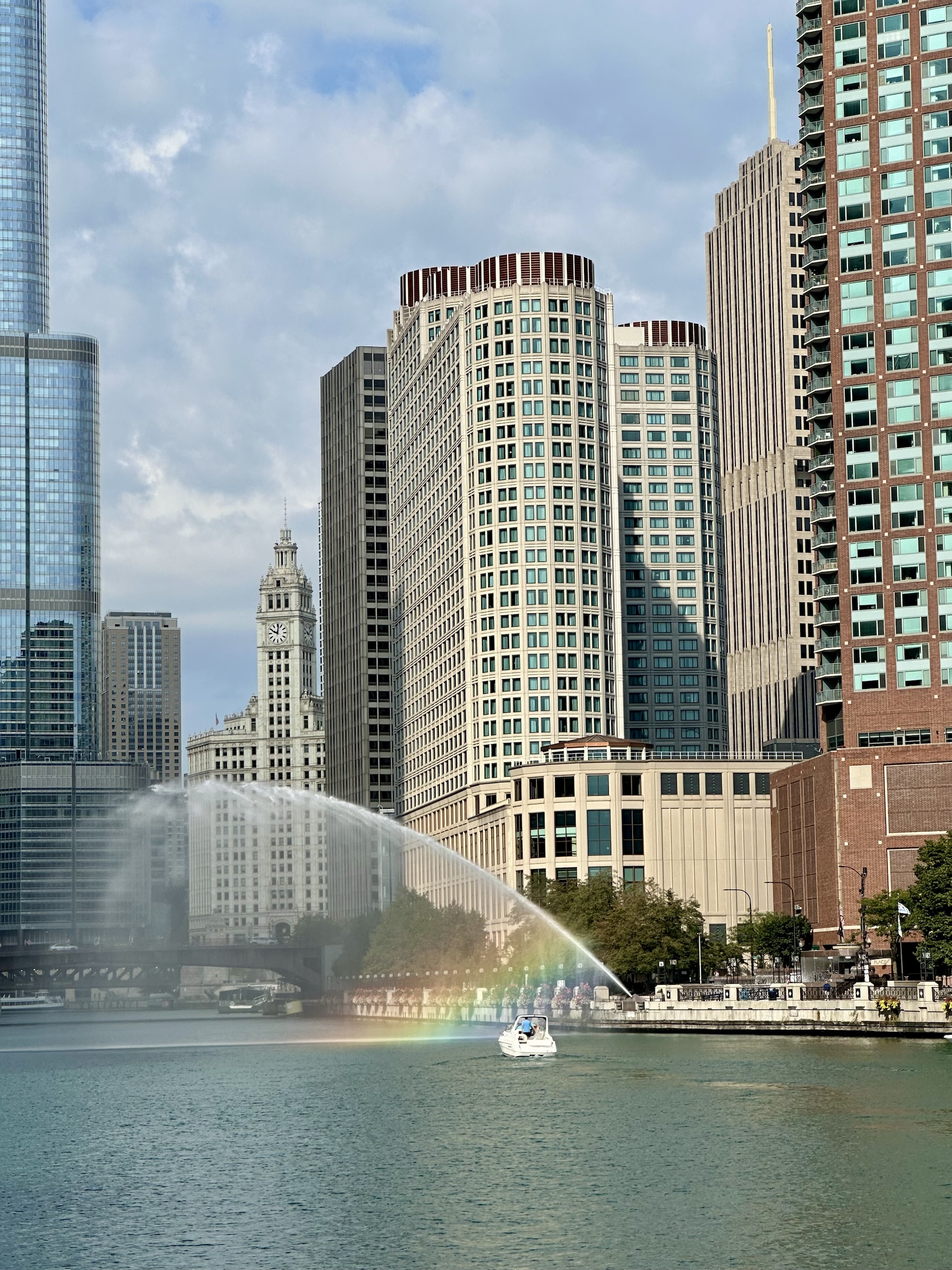
Housed in the lower 13 floors of the IBM Building, the last skyscraper designed by Mies van der Rohe before his death in 1969, and the only one of his buildings with double glazing. The reception was designed by Mies' own grandson, Dirk Lohan, who had already worked on the original building, and largely preserves the original travertine walls and granite floors. Individual floor slabs were removed to create double-height spaces for the lobby, ballroom, and pool. The art collection in the public areas comprises over 140 works, including pieces by Jaume Plensa and Anish Kapoor, the artists behind the Crown Fountain and Cloud Gate in Millennium Park. Awarded five stars by Forbes, located directly on the Chicago River. The city's most thoughtfully designed luxury option.
INSIDER:
The approximately 1,500-square-meter Chuan Spa is one of Chicago's best hotel spas and is worth a day visit, even if you're not staying at the hotel. Travelle, the hotel's restaurant, attracts as many external guests as hotel guests and is worth a reservation for its cuisine alone, especially for breakfast with river views.
The Robey, Wicker Park $
An Art Deco landmark from 1905, located at the six-lane intersection of Milwaukee, Damen, and North Avenue in Wicker Park. Two historic buildings have been connected, featuring wooden floors, glass walls, and exposed concrete throughout the property. There's a rooftop pool, several bars, and the neighborhood itself keeps you busy, even without a fixed plan. The hotel is part of Design Hotels and is considered one of the city's better value-for-money options.
CHICAGO ATHLETIC ASSOCIATION, The Loop $$
A former members' club dating back to 1893, located directly opposite Millennium Park. The building itself is already a landmark: with a Venetian Gothic facade, magnificent interiors, and a rooftop terrace offering unobstructed views over the park and Lake Michigan. There's a game room, several restaurants, and the history of the house can be felt on every floor. One of the most atmospheric hotels in all of Chicago.
Hidden Gems
Above the city, by the lake, somewhere in between.
Lincoln Park
A public park spanning approximately 480 hectares along the lake, freely accessible at any point. It began in the 1860s as a small public cemetery before citizens demanded its conversion into parkland after a cholera outbreak. The zoo is one of the last free zoos in the country and houses over 170 species. There are beaches, running paths, a conservatory, outdoor chess tables, and enough space to spend an entire day without a fixed plan. Chicago truly shines here on a clear afternoon.
The 606 Trail ,Wicker Park
A former elevated railway line, now a public trail approximately 4.3 kilometers long, running through Wicker Park, Bucktown, Logan Square, and Humboldt Park. Built on the old Bloomingdale Line, which was abandoned for decades before being redeveloped in 2015. Great for running and cycling, but equally good for a leisurely stroll, observing how the neighborhoods below change. Less famous than New York's High Line, and all the more enjoyable for it.
Montrose BEACH, Uptown
Chicago’s largest public beach, away from the busier downtown sections of Lake Michigan. It features sand, volleyball courts, a dog beach at the north end, and a protected dune habitat that attracts over 300 documented bird species during migratory season, including the federally endangered Great Lakes piping plover. There's a grassy area perfect for doing nothing, and a view of the harbor that, on a clear day, feels like the open sea. It’s best visited on a summer weekday.


USA ESTA
What you need to know before entering the United States
ESTA - Key Facts:
- Who needs it: EU, Great Britain, Australia, Japan, and over 40 other countries under the Visa Waiver Program
- Validity: 2 years or until passport expiration
- Length of stay per entry: up to 90 days
- Required document: valid passport, no ID card
- Processing time: within 3 business days
No ESTA possible?
If your country does not participate in the Visa Waiver Program, you will need a B-1/B-2 tourist visa. The application is submitted at the US Embassy and requires a personal interview. Allow several weeks for this process.
For longer stays:
- Work visa: requires a job offer and employer sponsorship
- Student visa: requires admission to a university
- Family visa: for family reunification with relatives in the USA
Check your requirements
Your USA ESTA in 4 simple steps. Apply for your Electronic Travel Authorisation for the United States. Valid for 2 years and for all your trips during this period. We handle the entire process for you, optionally with a visa guarantee.