Seoul City Guide.
"A city that carries a thousand years of history and still moves faster than any other."
Bars & Pubs
ZEST, Gangnam
Number two in all of Asia and the best bar in Korea two years in a row. Head bartender Kang-bin Lee has built a menu that relies consistently on Korean ingredients. The Jeju Garibaldi with bitter oranges from Jeju Island and the Daiquiri No. 6 are the best-known drinks, but the seasonal menu surprises on every visit. No theatrics, no gimmicks. Just very good cocktails in a calm, focused room.
INSIDER:
ALICE CHEONGDAM, Cheongdam
Reservations are strongly recommended and open online one week in advance. If you can't get a table, try the bar without a reservation, but come early. Ask the bartender for the seasonal recommendation, it is not on the regular menu.
Reservations are only accepted for the first two hours after opening. After that, walk-ins are possible, but the room is small. Don't come with a large group. Ask the bartender for the suggestion of the day, it changes daily.
INSIDER:
A speakeasy behind a flower shop in an alley in Cheongdam. No sign, no obvious entrance. Find the right flower shop, then look for the stairs leading down. Dark wood, velvet armchairs, wall art inspired by Alice in Wonderland. The cocktails follow the same playful logic as the interior, each with its own story. No. 13 on Asia's 50 Best Bars 2025.
BAR CHAM, Itaewon
A modern cocktail experience built on traditional Korean spirits. Soju and makgeolli are not treated as cheap everyday drinks here but as serious distillates with character. No. 6 on Asia's 50 Best Bars. The entrance is hidden, the interior intimate and quiet. Ideal for anyone who wants to experience Korean drinking culture on a different level.
SOOL GALLERY, Insadong
A tasting bar in Insadong, Seoul's traditional cultural district. Regional varieties from different Korean provinces, each with its own flavor profile. A Korean rice wine experience in an authentic setting, far removed from the mass market. Affordable, relaxed, very local.
MAGPIE BREWING, Haebangchon
The most respected craft beer bar in Seoul, in the Haebangchon neighborhood near Itaewon. Hopper IPA and rotating seasonal brews, all brewed in-house. Relaxed atmosphere, a mixed crowd of locals and expats, no pretension. The best place on this list for a laid-back evening without a plan.
SOUTHSIDE PARLOR, Itaewon
A craft cocktail bar in Itaewon with a relaxed atmosphere and good music. No tourist crowds, no dress code, no waiting. The Faker cocktails and Barton Springs are the best-known drinks. A good last stop after a long night in Itaewon.

Food & Cafés
GWANGJANG MARKET, Jongno
Open since 1905, Seoul's oldest active market and one of the few that has barely changed in over a century. No tourist attractions, no English signs at every stall, no curated experience. Work your way through the narrow aisles and you will find some of the best street food moments in the city. Bindaetteok, crispy mung bean pancakes straight off the hot griddle, mayak gimbap with mustard soy sauce, sundae made from pork intestine, fresh oysters and sannakji, raw octopus tentacles that are still moving. Loud, cramped, completely unglamorous and exactly why it is essential. The market is open from 9 a.m. to 11 p.m., and is at its liveliest between noon and early evening.
INSIDER:
In the main hall, right after the entrance on the Euljiro side, look for the bindaetteok stalls with the orange-red plastic chairs. Come at noon for the freshest pancakes. Bring cash, most stalls don't accept cards. Always order mayak gimbap with the mustard soy sauce, never without.
CAFÉ ONION, Seongsu
A former 1970s factory in the up-and-coming Seongsu neighborhood, fully preserved and converted into one of the city's best-known cafés. Raw concrete walls, original machinery, high ceilings. Croissants, pastries and homemade bread baked fresh daily and often sold out by noon. Seongsu itself is worth a visit of its own, with vintage shops, studios and independent galleries everywhere.
GEUMDWAEJI SIKDANG, Sindang
Michelin Bib Gourmand, the best pork BBQ in Seoul. No tourist district, no show. The focus is on the quality of the meat, not the quantity. Pork neck, cheek and belly are grilled at the table, and the staff show you how each cut is best eaten. Cheek in spring onion sauce, neck wrapped in a grilled basil leaf with miso. Flavor combinations you won't find anywhere else.
ORENO RAMEN, Insadong
A Michelin Guide restaurant with only two options on the menu: standard, or with extra meat and egg. A single dish, perfected over years. The broth is rich and creamy, the pork slow-cooked, the noodles spot on. Minimalist interior in Insadong, a short line at the door that moves quickly. One of the most affordable Michelin experiences
you can have in Seoul.
GEBANGSIKDANG, Insadong
Specializing in soy-marinated crab, shrimp and abalone. Every set comes with an assortment of banchan, grilled seaweed, rice and clam soup. The side dishes alone are on a
level most restaurants never reach. Fresh, precise, completely Korean.
Art & Galleries
Three spaces, three centuries.
NATIONAL MUSEUM OF KOREA, Yongsan
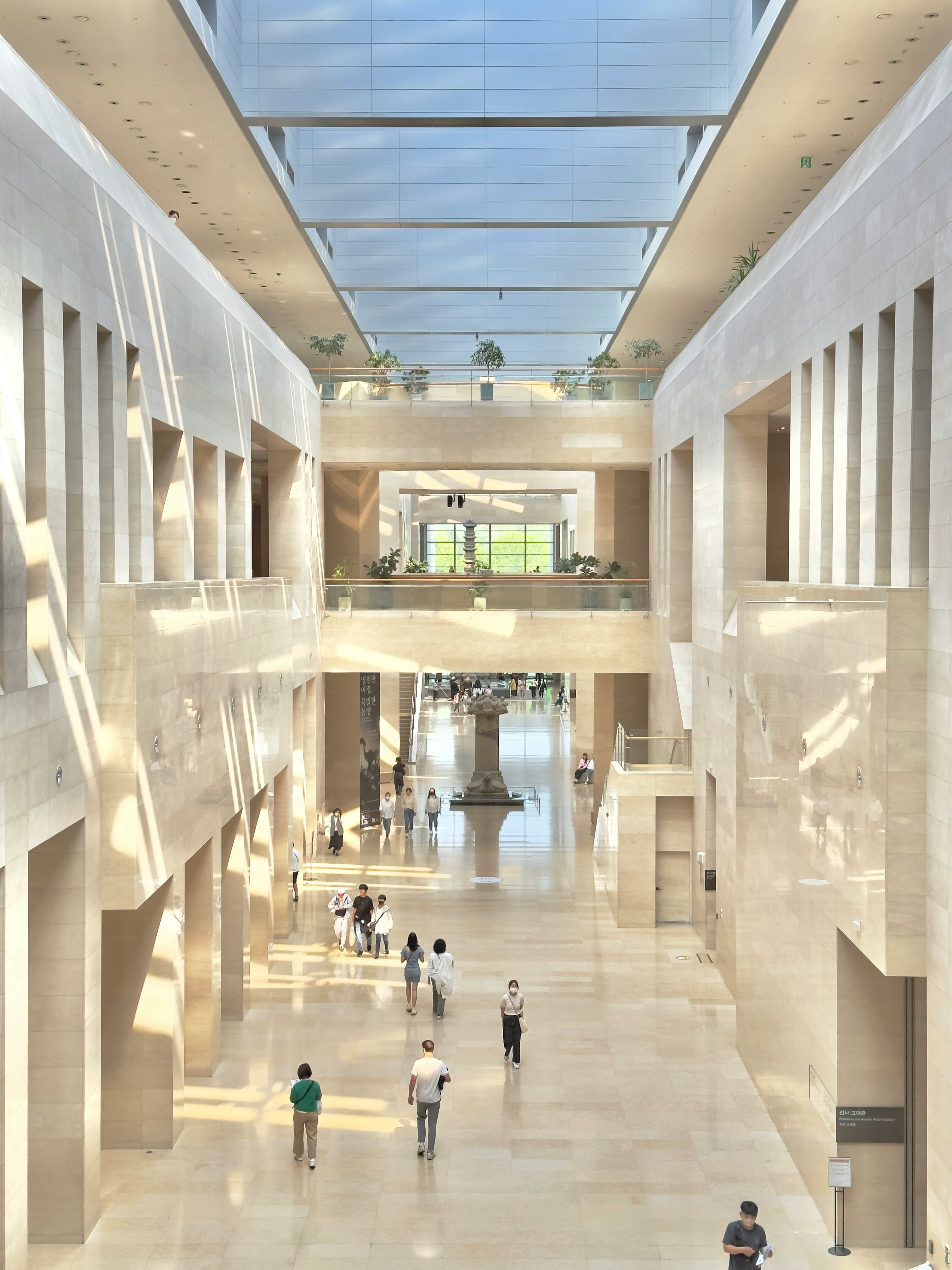
The flagship of Korea's museum landscape, with over 310,000 objects from Korean and Asian history. Cast bronze bells, golden crown ornaments from the Silla Kingdom, Buddhist sculptures, ceramics and paintings that have survived for millennia. During the Korean War, 20,000 objects were taken to safety in Busan, and all of them returned. The building itself is impressive, with an open view through the main hall to Namsan Mountain behind it. Free admission to the permanent exhibition. Almost four million visitors a year, and yet it never feels crowded.
PIKNIC, Seongsu
A former industrial building in Seongsu, converted into a space for contemporary art installations and immersive experiences. Every exhibition transforms the space completely, no permanent collection, no predictable concept. Seongsu itself is worth a visit of its own, right next to Café Onion and a growing scene of studios, concept stores and independent galleries that have settled into old factory halls. Check online beforehand to see what is currently on show.
ARARIO MUSEUM, Insadong
The former architecture office of Korean architect Kim Swoo-geun, built in 1971 and since 2014 a national cultural heritage site and contemporary art museum. The brick walls deliberately echo the aesthetics of the neighboring Changdeokgung Palace. The collection includes works by Nam June Paik, Damien Hirst, Marc Quinn and Kohei Nawa. The building is a labyrinth of low ceilings, narrow staircases and windows of different shapes, each room different from the last. Open 10 a.m. to 7 p.m., closed on Mondays.


Hotels
SIGNIEL SEOUL, Lotte World Tower $$$
Between the 76th and 101st floors of the 555-meter Lotte World Tower, the fifth-tallest building in the world. 235 rooms, all with floor-to-ceiling windows and panoramic views over Seoul and, on clear days, all the way to the Yellow Sea. A champagne bar lounge on one of the upper floors, the Michelin-starred restaurant Bicena, and an indoor pool with skyline views. Direct access to Jamsil subway station. The most impressive hotel experience in the city and one of the few hotels in the world that stays in your memory for its location alone.
INSIDER:
Room 82 on every floor is the hotel's most-booked room thanks to its unobstructed city panorama, so ask in advance whether it is available. The pool on the 85th floor is one of the highest in all of Asia and is worth booking as a day guest even if you are not staying at the hotel. At Salon de Signiel, complimentary champagne and wine are served in the evening to all hotel guests, and hardly anyone knows about it.
L7 HONGDAE, Hongdae $
Built on the site of a former gas station that was the neighborhood's landmark for 43 years. The hotel has deliberately embraced that energy. Hongdae is the center of Seoul's underground culture, with indie music, street art, busking and flea markets right outside the door. The rooms are modern and compact, some with views of the Han River. Rooftop bar Floating with views of the Namsan skyline, a seasonal outdoor pool, a gym, and a one-minute walk to the metro. The liveliest hotel on this list and the only one that truly belongs to its neighborhood.
L'ESCAPE HOTEL, Myeongdong $$
Designed by interior designer Jacques Garcia, known for his opulent Parisian Belle Époque interiors and for designing Hôtel Costes in Paris, among others. Antique wood, rich colors, symmetrical patterns and a signature house fragrance created by perfumer Aliénor Massenet. 235 rooms and suites, with a restaurant and bar on the ground floor. Completely unexpected for a city like Seoul and worth a visit for exactly that reason, even if you are not staying there. Right in the middle of Myeongdong, with everything within walking distance.
Hidden Gems
Three ways to understand Seoul.
BUKCHON HANOK VILLAGE, Jongno
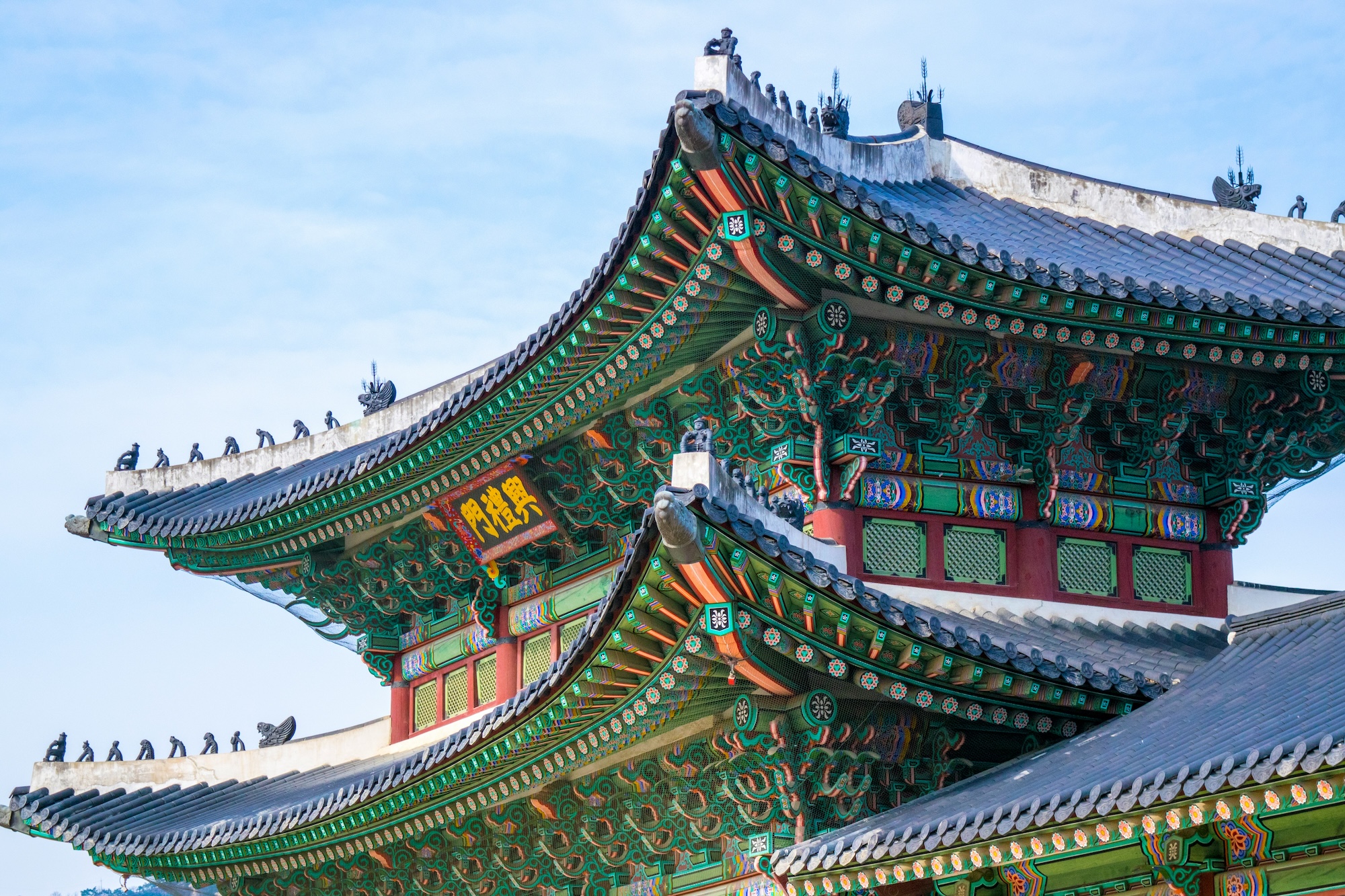
Over 900 preserved hanok houses from the Joseon Dynasty, nestled between Gyeongbokgung Palace and Changdeokgung Palace on a hill in the heart of the old town. Narrow cobbled alleys, curved tiled roofs, small pottery studios, teahouses and galleries behind old wooden doors. The neighborhood is lived in and not a museum, and you can clearly feel it. Laundry hangs on lines, children play in the alleys, grandmothers sit in front of their doorways. Early in the morning before 8 a.m. the alleys are almost empty and the light falls softly across the rooftops. Much busier later in the day, especially on weekends.
DONGMYO FLEA MARKET, Dongmyo
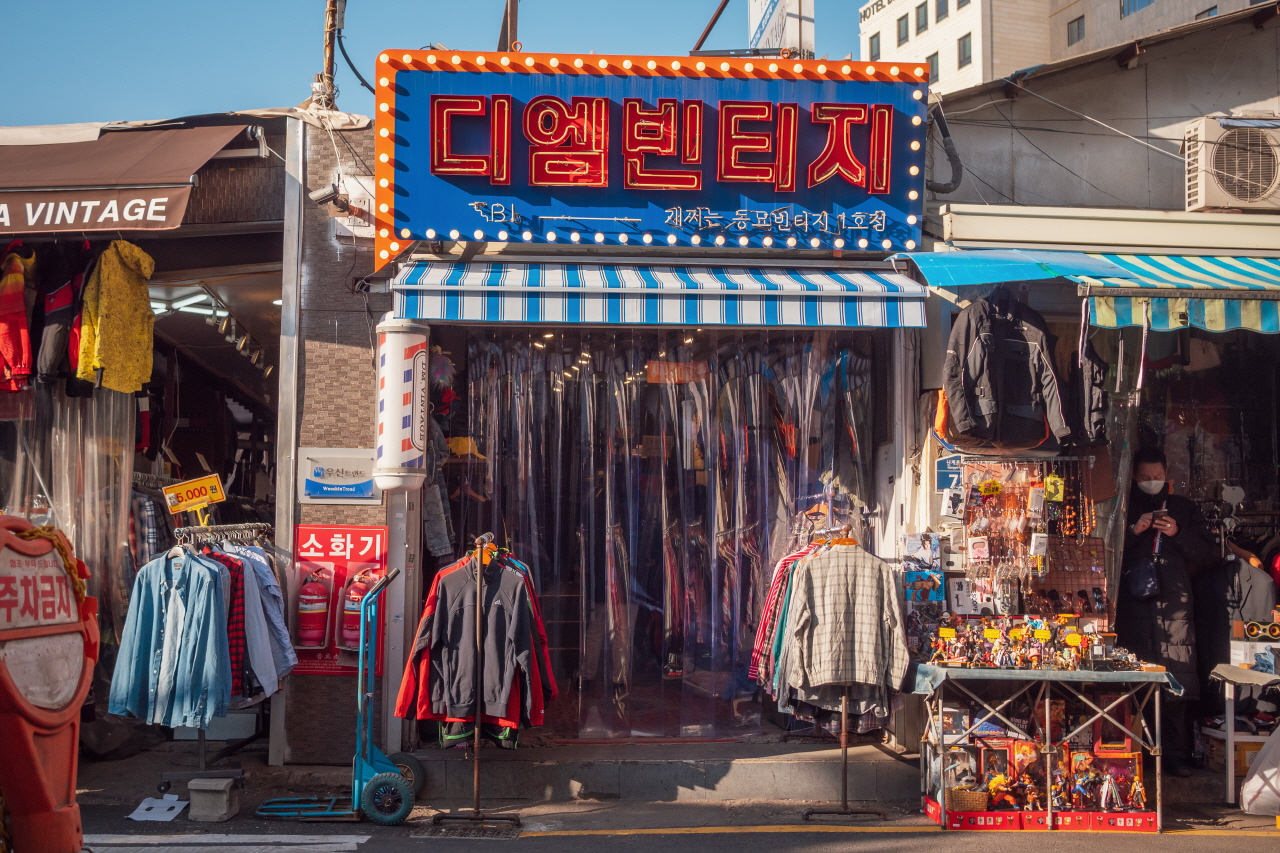
One of Seoul's oldest flea markets, open every day but liveliest on Saturdays when the biggest vendors set up their stalls. Old records from the 1970s and 80s, vintage clothing from several decades, Korean ceramics, antique wooden furniture, military memorabilia, kitchenware and curiosities that fit no category. No tourists, no English signs, no concept behind it. Most vendors have been here for decades and know every item in their stall.
GYEONGBOKGUNG PALACE, Jongno
The largest of the five royal palaces of the Joseon Dynasty, built in 1395 in the north of the old town. The grounds hold over 330 buildings, pavilions and gates, spread across an area of 410,000 square meters. The main gate Gwanghwamun, the throne hall Geunjeongjeon and the pavilions at Hyangwonjeong Pond are the highlights of the site. The peaks of Bugaksan rise in the background, a backdrop that is hard to forget. Right next to the National Museum of Korea, and the two combine easily in one day.



Working from Seoul
What you need to know before you open your laptop in South Korea
WORKATION: Key facts
- Who needs it: Any employee working remotely from South Korea for an employer abroad
- 90-day rule: Visa-free entry covers short-term remote work for up to 90 days
- Digital arrival card: Mandatory for all travelers before boarding
Visa-free entry:
- Who can enter: EU, Germany, UK, USA, Canada, Australia and over 100 other nationalities
- Length of stay: Up to 90 days
- Purpose: Tourism, business meetings, short-term work
- Required document: Valid passport
- K-ETA: Currently not required for the EU and Germany, exemption valid until the end of 2026
For longer stays:
- Digital Nomad Visa (F-1-D): for remote workers and freelancers, available since 2024, valid for up to 2 years
- E visa: requires a job offer and employer sponsorship
- D-2 student visa: requires admission to a Korean university
Check your requirements
Working from Seoul. The K-ETA exemption for EU citizens is currently straightforward, but temporary and subject to change. For longer stays, work visas or a K-ETA application, we handle the entire process for you, quickly and without detours, with confirmation before you travel. Entry and workation. Fast processing, digital delivery.